WET & PREPREG LAYUPS
Throughout my time at Duke AERO, I’ve worked extensively with both wet layup and prepreg composite fabrication, particularly for rocket airframes and control surfaces. While our techniques have evolved over time, each approach brings unique strengths depending on the application — from RF-transparent body tubes to carbon-reinforced control fins that demand high stiffness and strength.
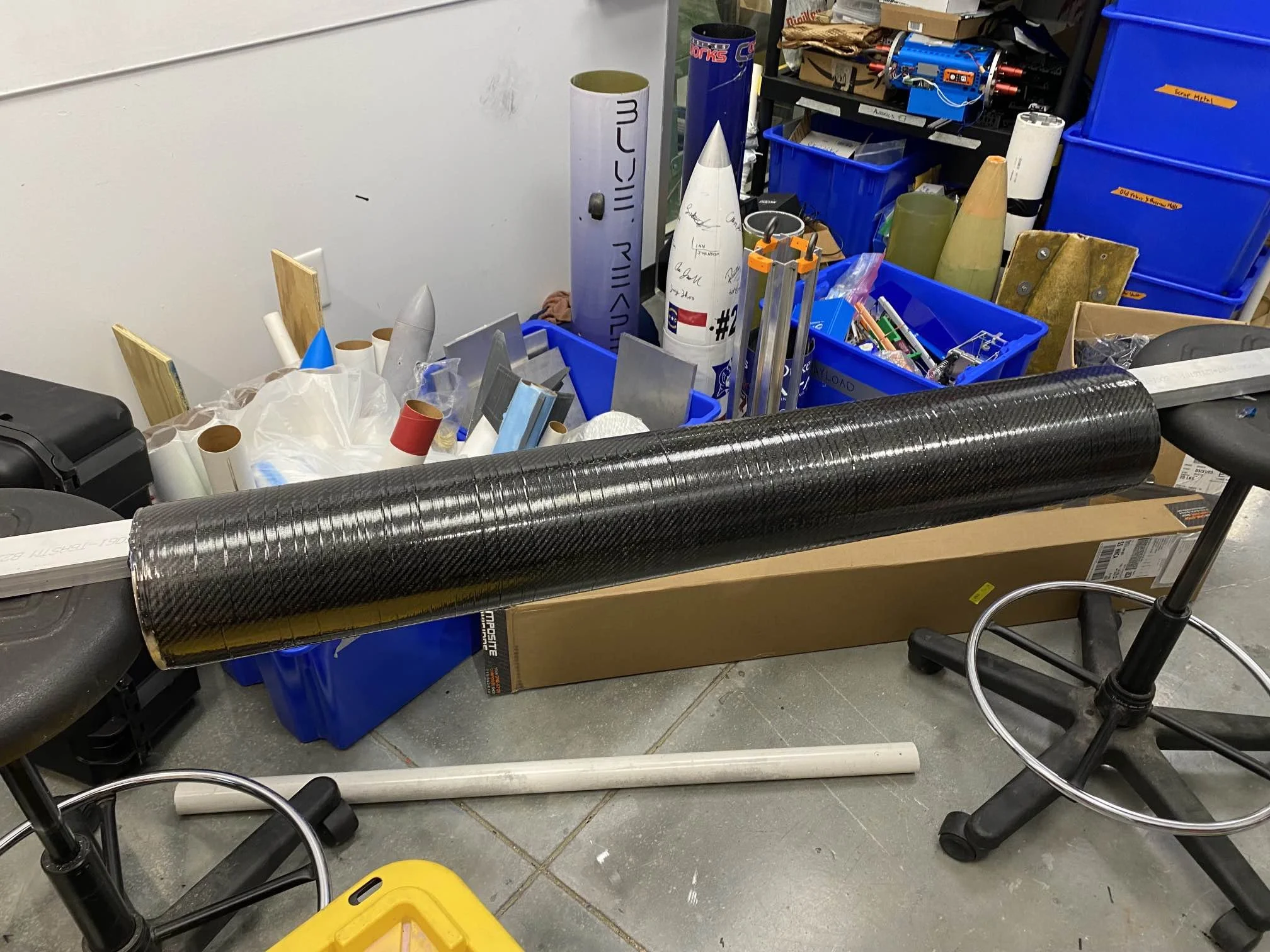
Wet Layups
Earlier in my college career, we primarily fabricated our rocket airframes using traditional wet layup techniques. This involved working with raw carbon fiber cloth and epoxy to form strong, lightweight tubes around precision 6061 aluminum mandrels.
The process began with cutting carbon fiber sheets to size based on the required tube diameter and length. A seal-release agent (such as Frekote or PTFE spray) was applied evenly to the mandrel to ensure easy part removal. Layer by layer, carbon fiber was wrapped onto the mandrel — often with the fiber orientation alternating between 0°, ±45°, and 90° to balance torsional and bending stiffness. As each ply was added, epoxy resin was applied and evenly distributed using rollers or squeegees, ensuring complete wet-out and minimizing voids.
Once layup was complete, the assembly was vacuum bagged and left to cure (either at ambient temperature or in an oven depending on the resin system). The final tube was removed from the mandrel, trimmed, and post-processed for structural integration.
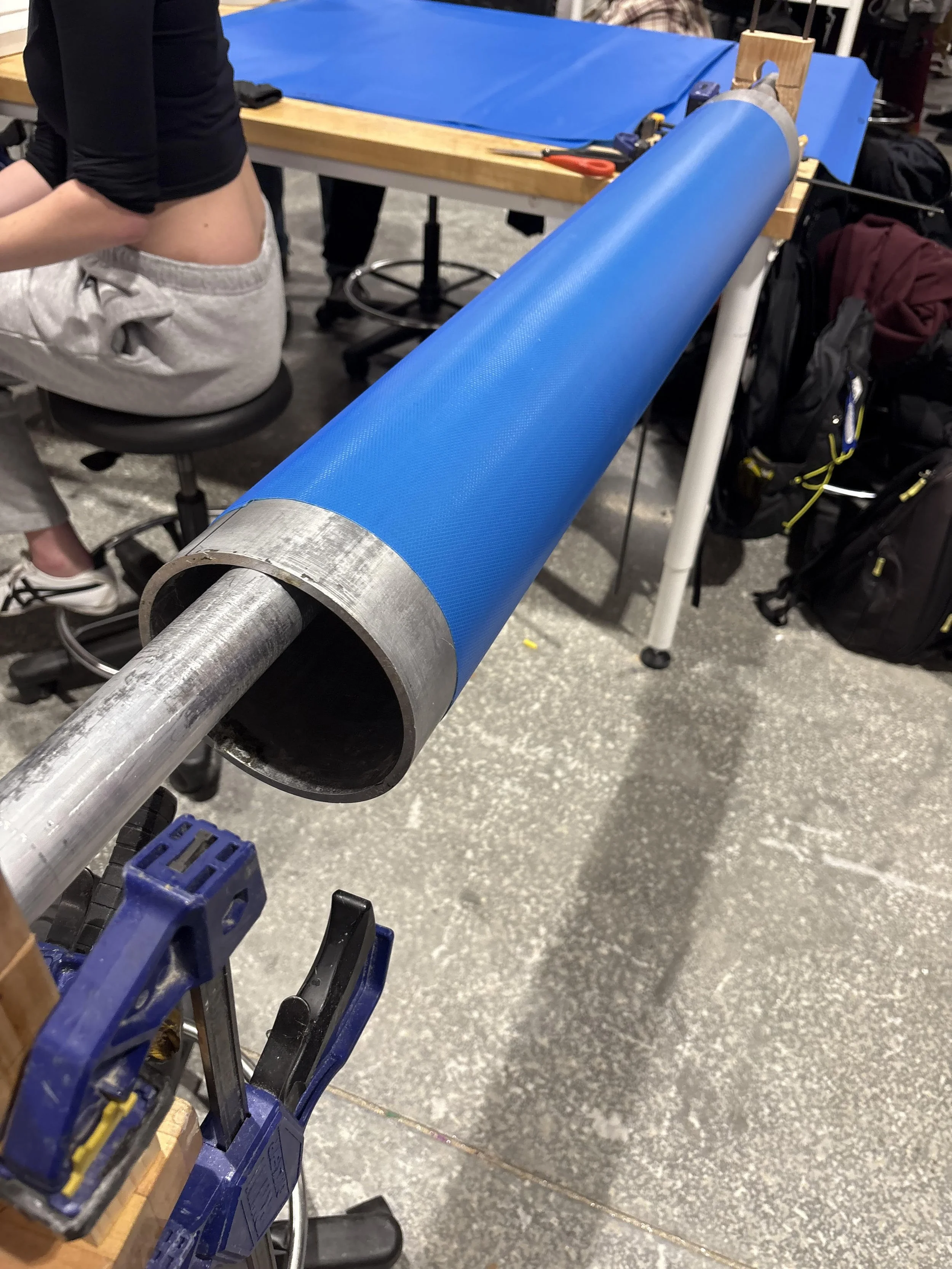
Prepreg Fiberglass Layups
As our design requirements evolved — especially for RF-transparent sections of the rocket that support avionics and telemetry — we transitioned to prepreg fiberglass body tubes. This approach significantly simplifies the process.
Prepreg sheets are pre-impregnated with resin, eliminating the need to manually mix and apply epoxy. After cutting the fiberglass to shape, it’s laid directly onto the release-coated mandrel, carefully wrapped, and then vacuum bagged. The reduced number of steps, cleaner handling, and improved consistency make prepreg ideal for body tubes — especially when weight and RF performance are both critical.
Wet Layup Fins
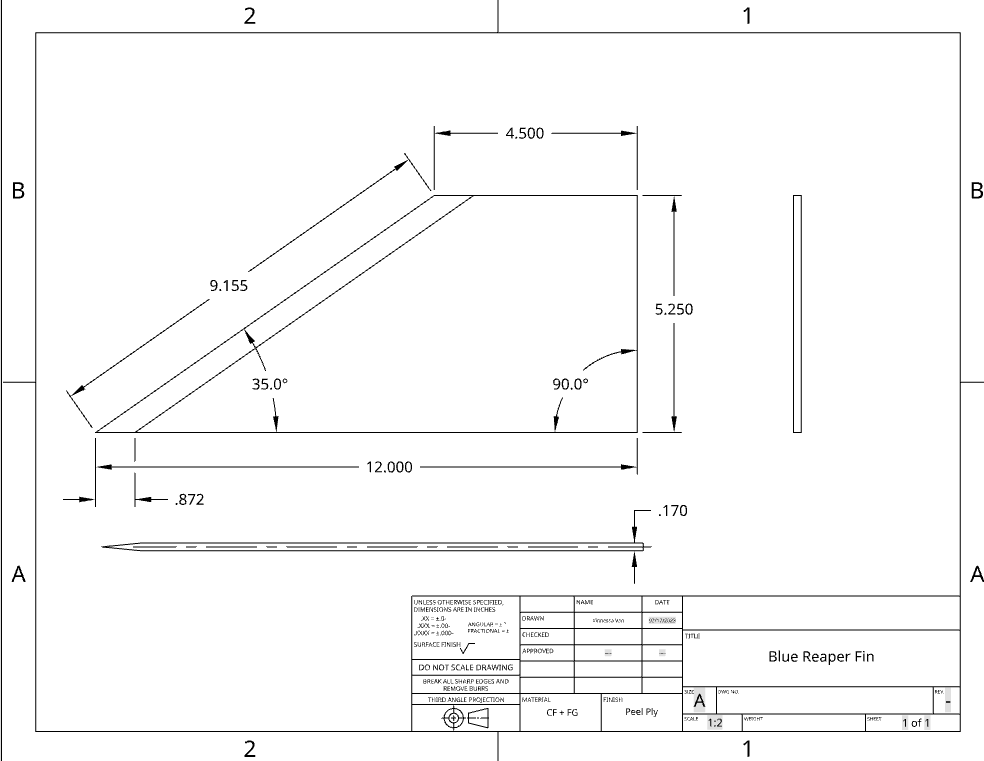
While body tubes have moved to fiberglass, our fins are still built using wet layups to achieve the required stiffness and strength. The base of each fin starts with a 1 ft² sheet of fiberglass.
Over this, we lay carbon fiber plies in alternating weave directions — typically alternating between ±45° and 0/90° orientations. This layering provides excellent resistance to flutter and bending. Epoxy is applied and worked into the fibers using a brush & squeegee.
Once cured, the fins are trimmed and dimensioned to spec, often using waterjet cutting for clean, precise edges. The result is a strong, lightweight fin capable of withstanding aerodynamic and structural loads during flight.