CANARD COMPUTATIONAL FLUID DYNAMICS RESEARCH
(Spring 2025)
This independent research study began as an opportunity to learn and apply computational fluid dynamics (CFD) for the first time, focusing on the post-burn flight dynamics of Duke AERO’s competition rocket. Under the mentorship of Professor Earl Dowell, I investigated how different canard deflection angles influence turbulence, flow separation, and roll stability at supersonic speeds. Over the course of the spring semester, I developed detailed models using ANSYS Fluent and performed simulations to visualize unsteady aerodynamic phenomena. I am now continuing this research over the summer with a deeper focus on improving simulation fidelity. Key objectives include implementing symmetry planes to refine mesh quality (achieving target y+ values under 5) and calculating the aerodynamic moment generated by the canards—both manually and through Fluent—to better understand their control authority. This extended work aims to produce more accurate data for future rocket design optimization and contribute to the broader understanding of high-speed flow control in aerospace systems.
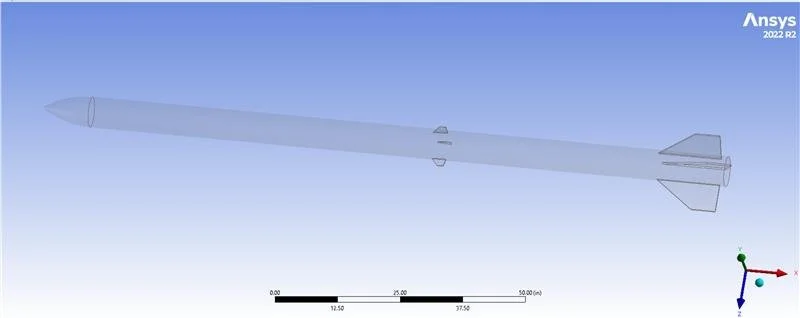
ANSYS Fluent Geometry

OnShape Assembly
Seen above is the geometry in both OnShape and in ANSYS Fluent. To isolate the aerodynamic effects of canard deflection in Fluent, the geometry was limited to include only the rocket body, nosecone, three rear fins, and three forward canards. Three separate models were created—each representing a different canard angle of attack: 0°, 3°, and 5°. These angles were chosen to capture the operational range of the rocket’s control system, with 0° as the baseline and 5° representing the mechanical maximum deflection permitted by the steering mechanism
Below is the mesh used during the semester long portion of the study and the current symmetry mesh. As of 5/26, the symmetric meshes have an area weight y+ value of ~5.06 with an ideal mesh sizing of less than 5. In the earlier research, I settled with a y+ of ~35-47, remaining outside of the gray 5-30 zone.
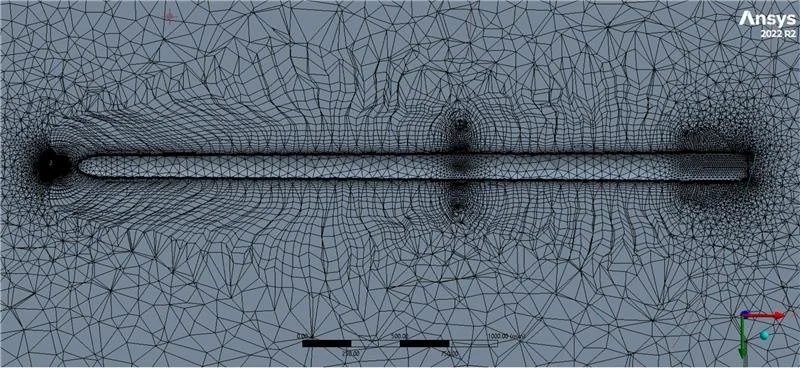
ANSYS Fluent Full 3D Mesh (y+ ~ 45)
RESULTS
I have given a few important and interesting results beneath this text but if you would like to know more about the study and the importance of understanding the flight characteristics of a supersonic competition rocket, feel free to explore the PDF by clicking any of the images below.
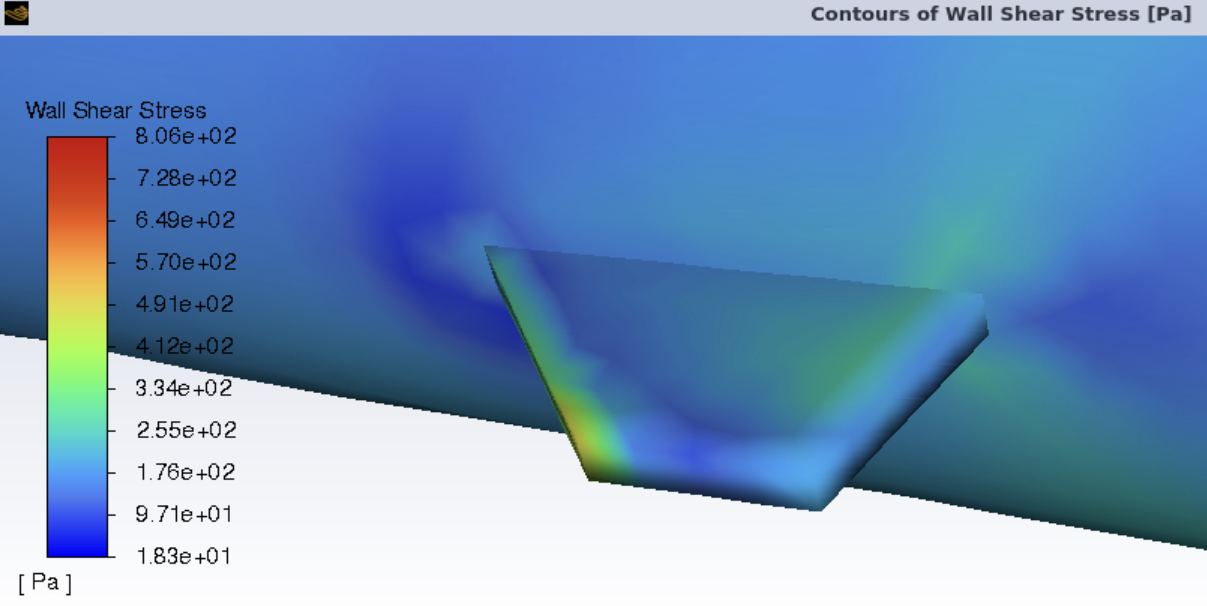
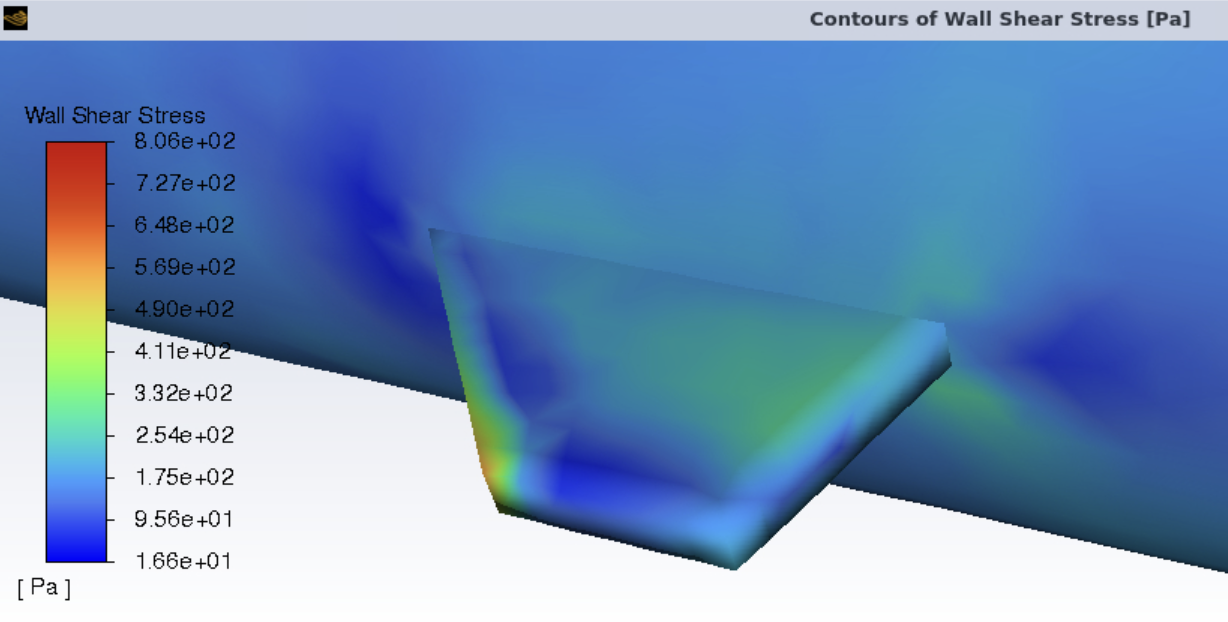
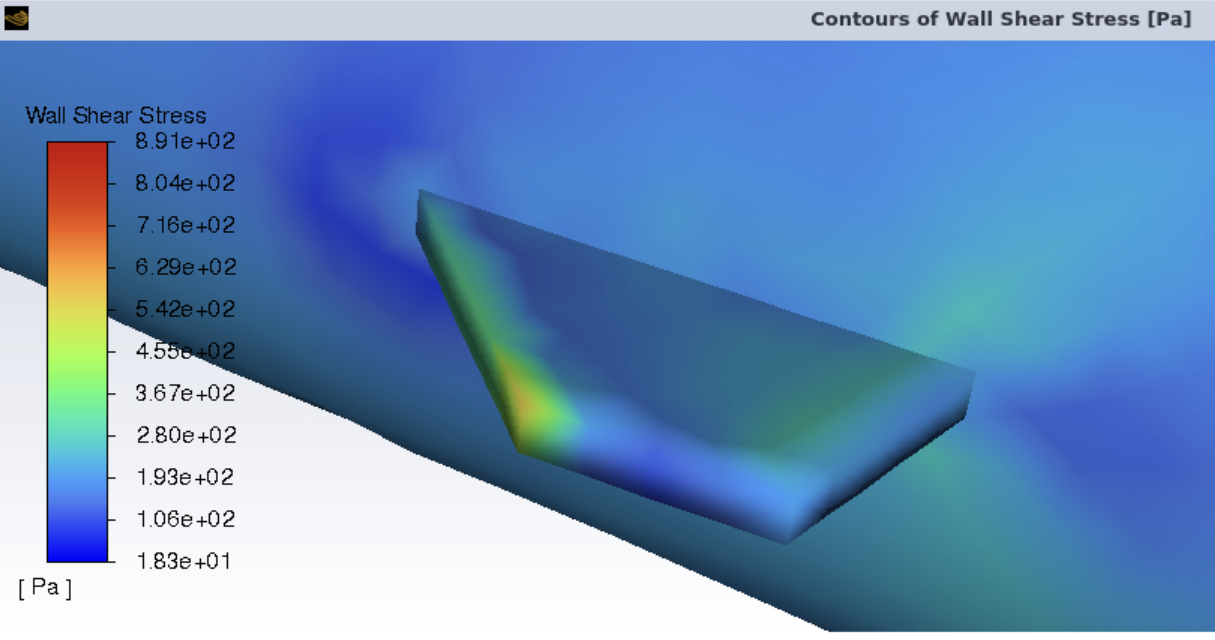
0°, 3°, and 5° Canard Wall Shear Stress, Respectively