Compressible Flow Analysis of Supersonic Elevon Control Surfaces
ME536 Compressible Fluid Flow | Duke University
Supersonic aircraft like Concorde operate in a flight regime where the air no longer behaves the way it does around conventional subsonic aircraft. At speeds above Mach 1, aerodynamic surfaces are dominated by compressibility effects, meaning shocks, expansion fans, pressure jumps, and wave drag become central to how lift, drag, and control authority are generated. This project explored those effects through a simplified Concorde-inspired wing-root airfoil with a trailing-edge elevon, using both hand calculations and CFD to understand how a small control-surface deflection changes the surrounding supersonic flow field.
Project Highlights:
Modeled a 2D diamond airfoil inspired by Concorde-style thin supersonic wing sections
Performed hand calculations using oblique shock and Prandtl–Meyer expansion theory
Integrated pressure distributions to calculate lift, drag, and pitching moment
Built and simulated baseline and deflected elevon cases in ANSYS Fluent
Compared analytical results against CFD validation
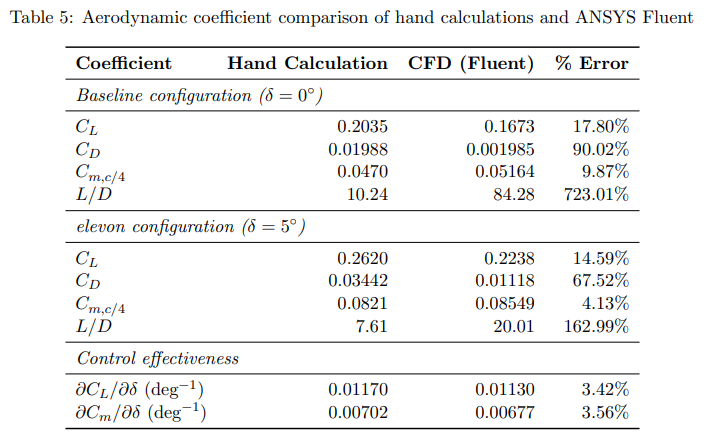
Found that a 5° elevon deflection increased lift and pitching moment, but significantly increased wave drag
Key Result:
A 5° elevon deflection increased the lift coefficient from 0.2035 to 0.2620, while reducing aerodynamic efficiency due to additional shock formation
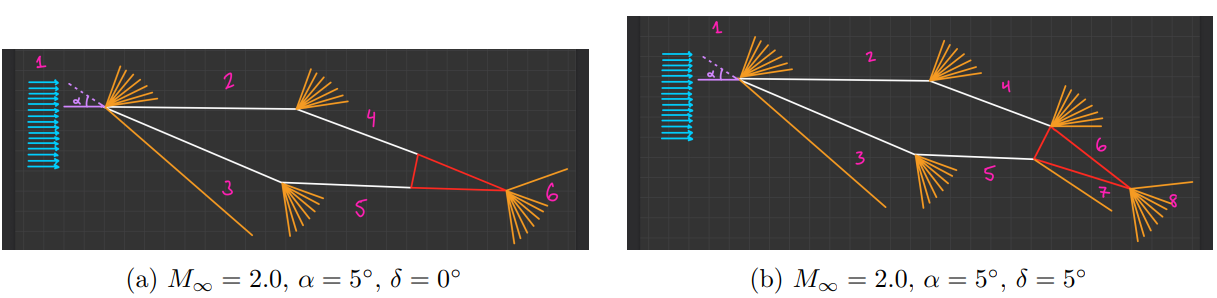
Hand Calculation Setup
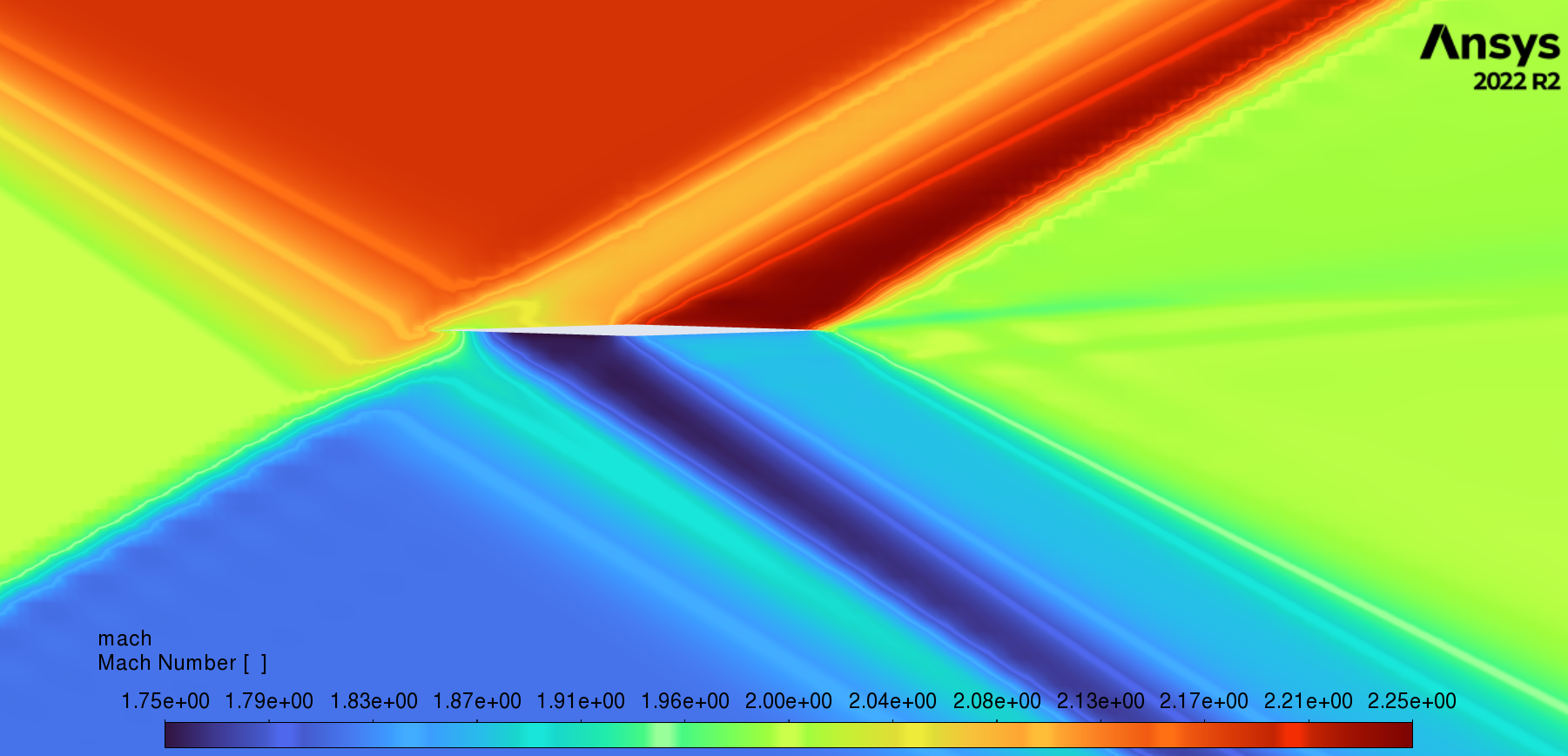
Baseline Mach Number Contour
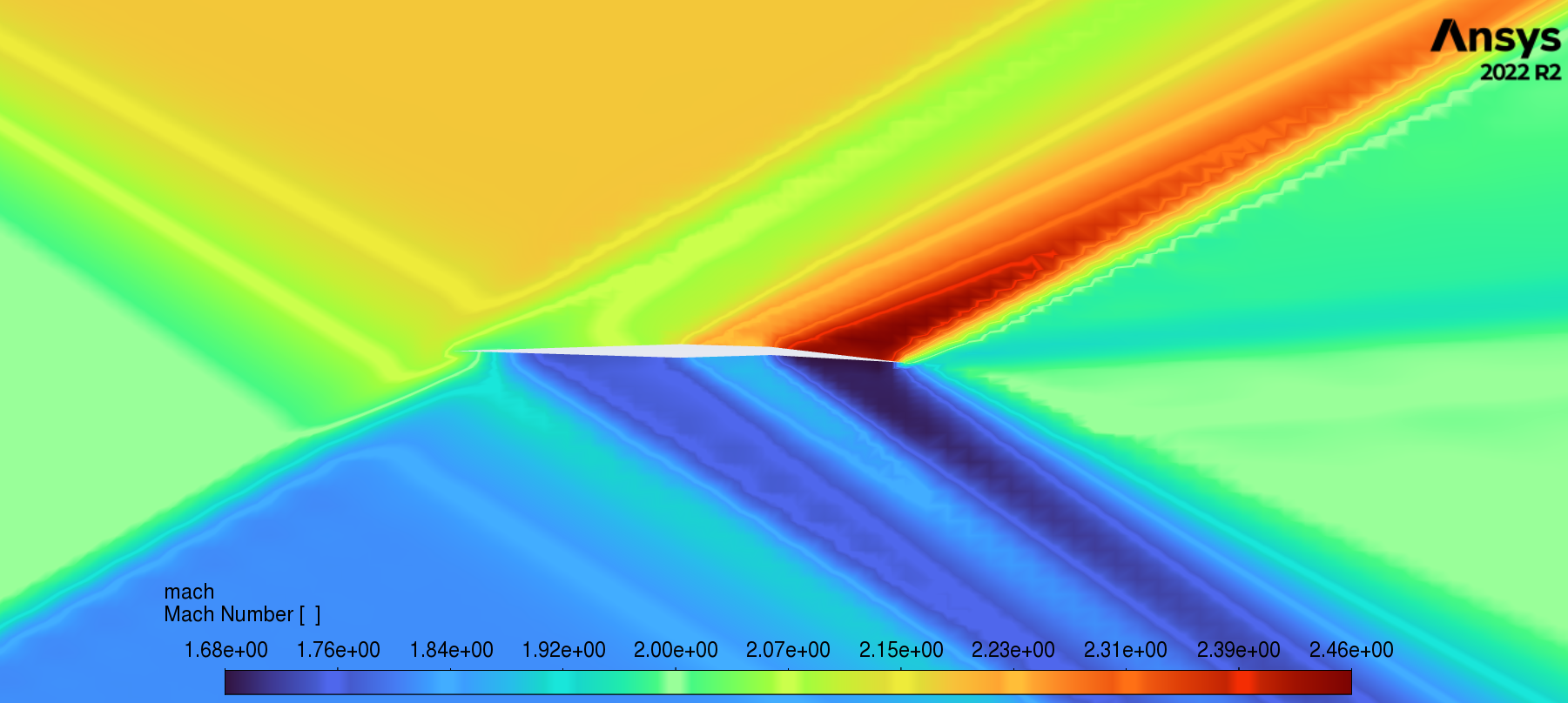
5 Degree Deflection Mach Number Contour