HOSPITAL BED BIKE
(Fall 2022)
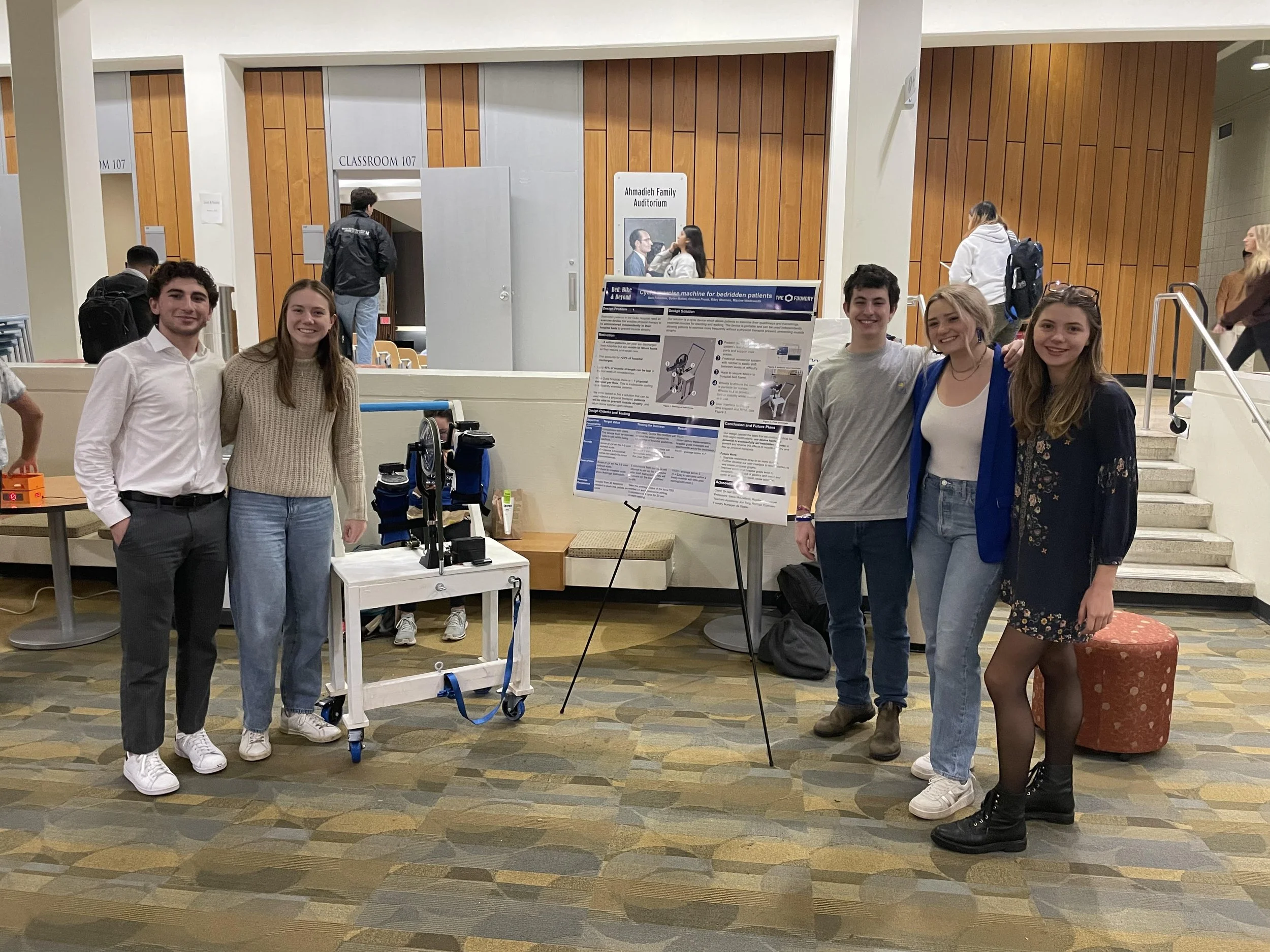
The "Bed Bike & Beyond" project aimed to create an accessible, user-friendly physical therapy device tailored specifically for bedridden patients at Duke Hospital. Working closely with our client, Dr. Neil Stafford from Duke Hospital, we directly engaged in the comprehensive engineering and design process—from defining the problem and conducting extensive background research to specifying requirements, brainstorming solutions, prototyping, rigorous testing, and iterative improvements based on data and client feedback. Recognizing the severe risks of muscle atrophy due to prolonged immobilization—potentially losing up to 40% of muscle strength within a single week—our solution facilitated self-administered therapy directly from the patient's hospital bed. This innovative approach was designed to alleviate strain on medical staff resources and empower patients in their recovery journey.
RESEARCH & DEVELOPMENT
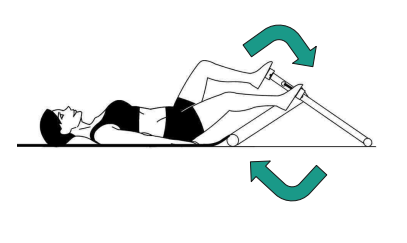
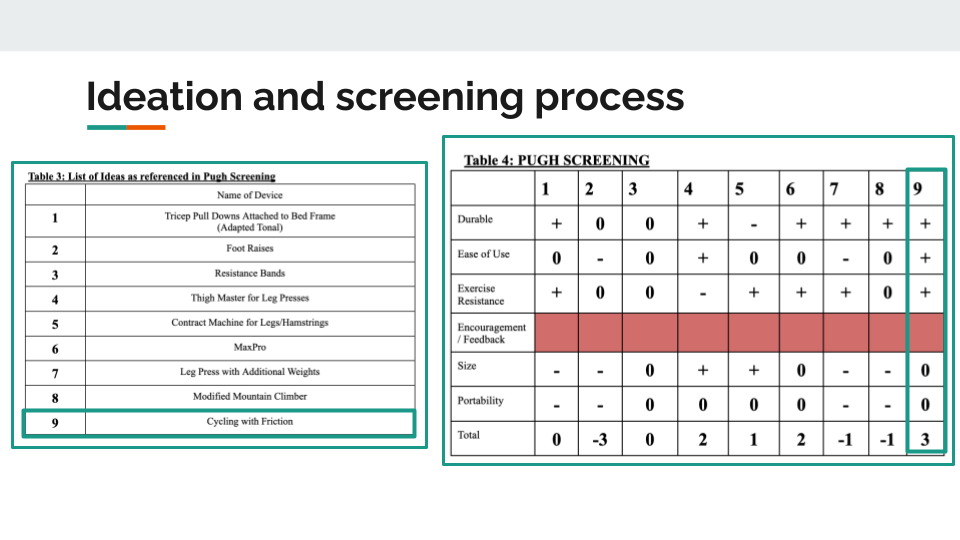
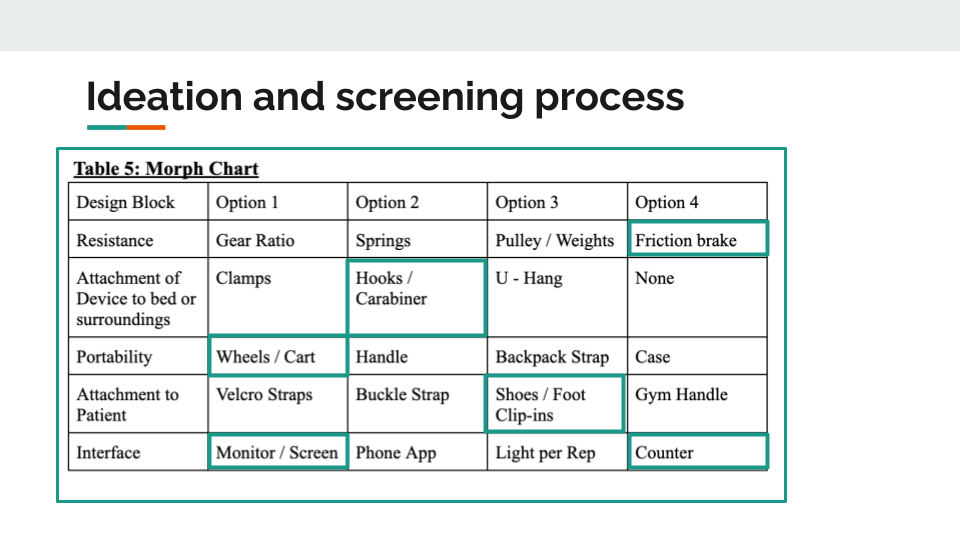
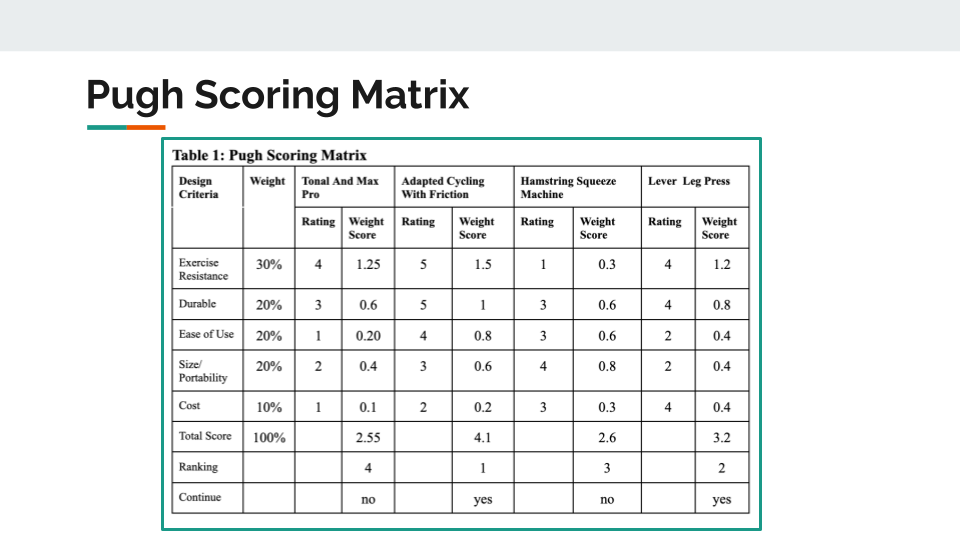
Our extensive research involved analyzing existing physical therapy practices, hospital equipment regulations, and patient requirements. Key considerations included ensuring patient safety by avoiding hazards such as spring-back or sharp edges, maintaining hygiene standards compatible with hospital cleaning protocols, and providing measurable feedback to motivate patient engagement. Our ideation phase produced over 60 initial concepts, carefully narrowed through rigorous evaluation and scoring matrices. Ultimately, the chosen design was a friction-based adapted unicycle mechanism, identified for its ease of use, portability, adjustable resistance, and comprehensive engagement of essential lower body muscle groups such as quadriceps, hamstrings, and calves.
PROTOTYPE & THEORETICAL
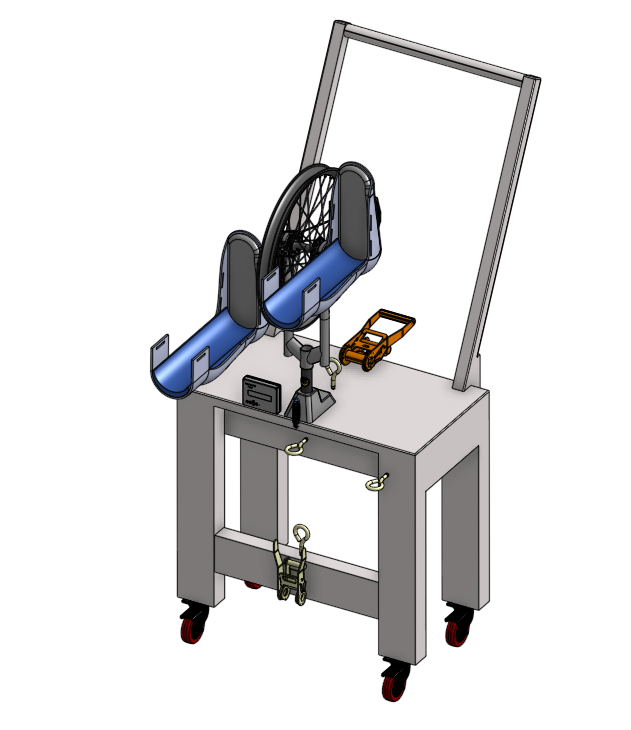
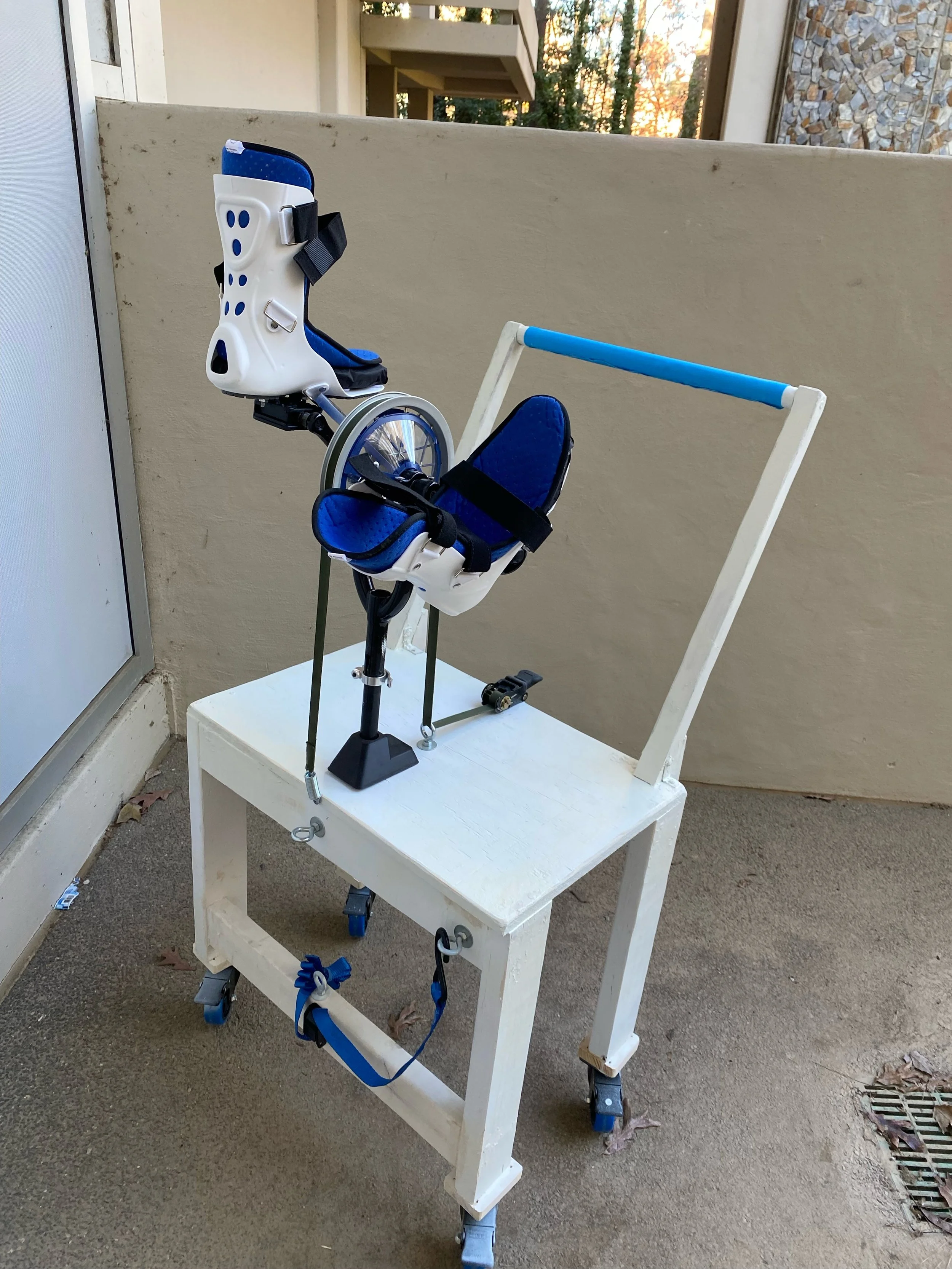
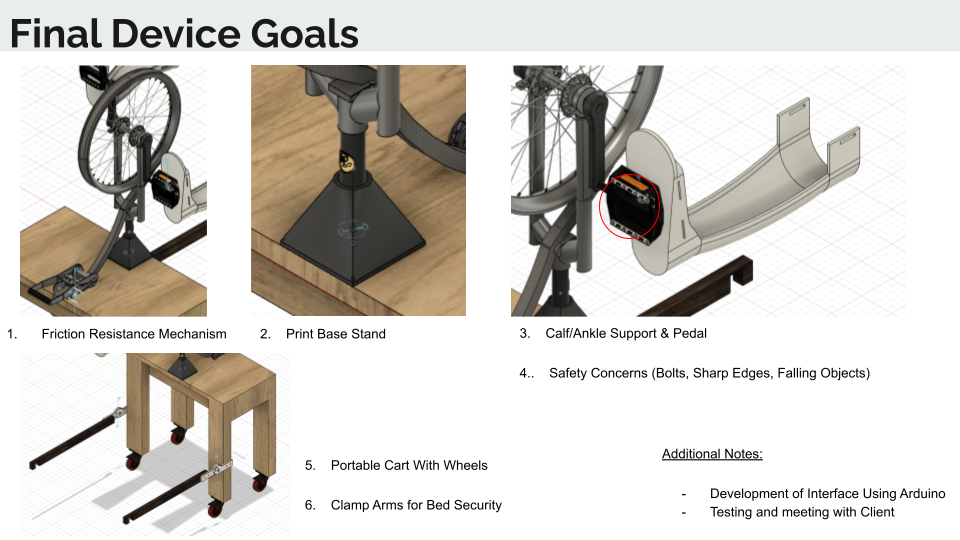
The developed prototype incorporated a friction-based resistance mechanism using a felt friction pad and an adjustable spring system, offering five levels of resistance. It featured supportive padded pedals, ensuring secure foot placement and preventing discomfort or injury during exercises. The device's base was mounted on a portable wheeled cart, enabling easy transportation between patient rooms. Preliminary testing with able-bodied volunteers demonstrated successful functionality, durability, and user-friendliness, verifying the theoretical expectations. The prototype met critical design criteria, including safety, ease of use, and effective resistance.
ADDITIONAL GRAPHICS & VIDEOS